
I AM OVER HALFWAY through reading “A Passage to India” by EM Forster (1879-1970). In this exciting novel, which contains the author’s acute observations about the minutiae of India as it was before Independence and to a large degree after, Dr Aziz, an Indian, ill-advised (in my opinion) accompanies two English ladies to the Marabar Caves (a fictional name). Trouble ensues, and Dr Aziz is arrested. I will not give away the rest of what I have read so far, but will mention some caves in Mandu (Madhya Pradesh), which we visited on Christmas Day 2025.
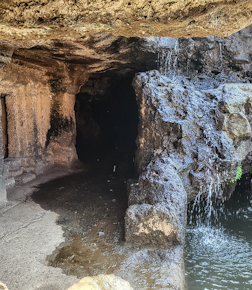
The caves are close to the scant remains of Mandu’s Lohani Gate. Easy to enter, they were excavated and converted into chambers or cells where Hindu priests or yogi might once have resided. Archaeological evidence suggests that the caves were excavated and modified in the eleventh or twelfth century. They predate all of the other archaeological sites in Mandu.
Fortunately, our visit to these caves was less eventful and sinister as is described in Forster’s excellent story. In fact, the Lohani Caves are delightful, and considering how close they are to Mandu’s most visited places, they are ignored by most tourists.
Now, I must leave you and get back to my tattered copy of “A Passage to India”.
PS: by “minutiae” I include Forster’s detailed description of the behaviour of Indian squirrels and the Echo Point at Mandu, which we saw recently, as well as the curious echo effects at the Gol Gumbaz in Bijapur, which I have experienced.
 yamey
yamey 
One of my favourite books and the film was fabulous too. I doubt I’ll ever visit the caves so I am grateful for your visit and account.