
Just let it grow

BETWEEN 1983 AND 1994, I owned a house in Gillingham, Kent. It was not an exceptional building, but it had a long back garden – 180 feet in length and about 22 feet wide. Much of the garden was covered with a lawn bordered by plant beds. When I first moved in, I attended the garden keenly even though I had little idea about gardening. As soon as I unearthed weeds, they re-appeared. It was most disheartening.  I discovered that planting shrubs was the best way to hide the weeds, about which I soon stopped worrying.
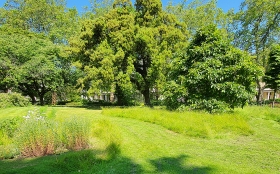
As for the lawn, I acquired a mowing machine, and for some months, or maybe years, I trimmed the grass regularly. Then, I found that whenever I cut the lawn, my nose would start streaming and I would have fits of sneezing. I realised that I had a grass allergy. So, I decided to cease mowing the lawn. I let the grass grow higher and higher. When it reached its greatest height, people sitting in the garden would be hidden by it. At the end of the year, the grass collapsed and more or less disappeared – only to begin growing again the following spring. I let nature take its course, and ceased worrying about it until a deputation consisting of my immediate neighbours came to my house to complain about my unruly lawn and garden. One of them, an elderly lady, was convinced that all the weeds and insects in her garden had come from mine.

One summer evening, I came home after dark and as it was a pleasant evening, I stood in my back garden looking up at the stars. As I did so, I was aware of a slight smell of burning. The following day, one of my neighbours saw me in the street as I was setting off for work. He told me that the neighbour on the other side of the garden had set fire to mine, hoping that the flames would kill the weeds. Luckily, he had spotted the conflagration, and extinguished it before it did too much damage.

Following the neighbours’ complaints, I conceived an idea about how to deal with my lawn. I decided that I would let it grow without interference, but I would mow a narrow sinuous path along its length. The idea was that I could then explain to the neighbours that the wild grass was part of my garden design. Meanwhile, my shrubs increased in size steadily and the weeds flourished. In the warmer months of the year, whenever I strolled in my garden, clouds of butterflies used to billow from the luxuriant vegetation.

Today, in June 2023, whilst walking in Kensington Gardens, I noticed that much of the grass was growing wild – not being mowed. Here and there, the gardeners had trimmed small areas of grass with a lawnmower, much as I used to do back in Gillingham in the 1980s.

To be honest, I let my garden grow wild because I could not be bothered to spend hours of my life making it look neat and tidy. Today, what I was doing – letting the plants ‘do their own thing’ – is known as ‘wilding’. Maybe, unwittingly I was a pioneer of wilding.
Gardening and me

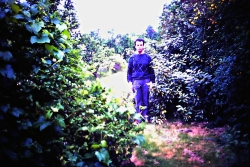
I LOVE GARDENS BUT I am not, and never have been, a great gardener. As a child, I used to mow the lawn and cut parts of the privet hedge surrounding our garden in Hampstead Garden Suburb. Neither of these activities endeared me to gardening. In 1983, I became a homeowner in Gillingham, Kent. My house had a 180-foot-long garden which was about 30 feet wide. About 120 feet of it was lawn bordered by narrow beds and the rest of it was, I imagine, once dedicated to growing fruit and vegetables. On taking possession of my new home, I was determined to make a success of the garden.

For a few weeks, I dug up weeds, hoping to clear a space to plant potatoes and onions. Day after day, I would return home from a session of pulling out teeth and other dental activities and then get down to pulling up weeds. It was disheartening to discover that a patch, which I had cleared a day earlier, was already becoming refilled with weeds. What I did not know at the time was that my garden was infested with a weed that was extremely difficult to eradicate manually or even with chemicals. The smallest fragment of this horrendous plant was enough to ensure its rapid and thorough propagation.

After a while, I abandoned my grand ground clearance plans and lowered my ambitions. I decided to clear a small patch to grow some parsley, a herb that was only available in local shops at Christmas time. I planted the seeds as instructed on the packet, watered them as required, and inspected the parsley patch every day.  Soon, tiny green shoots began appearing. I was horrified. I thought that once again the weeds were beginning to defeat me. So, I plucked them out to clear the ground for my parsley to have the best chance of its survival. It was only later that I realised that what I had regarded as weeds was in fact the parsley I was hoping to grow.

My solution to managing my garden was simple and effective. I began visiting garden centres to buy fast-growing shrubs. I had decided to let them compete with the weeds instead of me. This plan was successful. Soon, I had plenty of attractive plants that were growing larger in height and volume at high speed.

The long lawn proved problematic after a while. I bought an electric mowing machine that trimmed the grass nicely. However, it was not long before I began sneezing violently whilst mowing the lawn or even driving past a lawn that was being mowed. I tried mowing while wearing a paper face mask such as is commonly seen today during the covid19 pandemic. The mask proved to be useless even though it covered nose and mouth. My solution was to abandon mowing and just to let the grass do ‘its own thing’.

My neighbours were not happy about my wild looking garden, which, incidentally, became a haven for butterflies. They complained to me. My solution was to mow a winding path, the width of the mowing machine, through the savannah that was developing on my lawn. I explained to my neighbours that this was a carefully conceived plan to create a wildlife garden. I am not sure that this convinced them, but the level of complaining diminished. My neighbours were not so keen on wildlife as the following will demonstrate. One evening, someone living in my neighbourhood rang my doorbell. He asked me whether I wanted to contribute some money to help pay for the hire of a professional gun man to shoot the local foxes. I sent him away empty handed.

One evening, I returned from dinner with friends and as it was a pleasant night, I stepped out into my garden. I was surprised to smell burning but could see no fire. On the next morning, I met one of my neighbours and mentioned the burning to him. He told me that he had extinguished the fire before it reached my house. He said that the elderly lady who lived on the other side of my house had become fed up with the state of my garden and had set fire to it hoping that might prevent the spread of weeds from my garden to hers.

What is interesting is that when I came to sell my house back in 1995, at a time when the property market in the area was sluggish, it was the garden that appealed to the buyers. Apart from the fact that the house was the kind that they were seeking, it was the prospect of taming the garden, which the estate agent had described as being “in its natural state”, that appealed to the buyers. Sometime after the purchase was over, we dropped in to say hello to the new buyers. They showed us the garden. It looked as if it had been sprayed with a strong herbicide. The grass had gone, so had the atmosphere of wildness; the garden seemed sterile. However, I noted that all my shrubs had been preserved.

Now, I do not want you to get the impression that I have something against gardening. I do not like doing it, but I admire those who do it. Gardening is a complex art form in which human beings have to harmonise with nature to produce aesthetically pleasing results. Not only does the geometry of the laying out of plants have to look good, but garden planning must take into consideration the passage of time, the seasons, meteorology, the behaviour of pests and weeds, and ecology. In addition, there is also the distribution of form, colour, and odour that must be planned. And above all, the maintenance of healthy growth adds to the complexity of gardening successfully. A successful garden is multi-dimensional artform involving all the six senses as well as the relentless passage of time and the endless changes in the weather.

Rather like music, which I enjoy listening but cannot perform, I gain great pleasure from gardens, but prefer others to create and maintain them.