
DURING WW1, THERE were German Air raids over the town of Ramsgate in Kent. Many were killed by relatively few bombs.
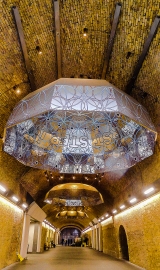
In the late 1930s, the forward thinking Mayor of Ramsgate and his Chief Engineer designed a series of tunnels deep below the town to be used as air raid shelters. Over three miles of tunnels were dug into the chalk far below the town. The digging was carried out by miners from the (now closed) coal mines of East Kent.

Except for a short section about 25 feet below the ground, which was reinforced with thick concrete, the rest of the tunnel system, which was on average 75 feet below the surface, was self supporting. The tunnels could accommodate up to 60000 people, but because many of Ramsgate’s population were either evacuated or serving inthe armed forces, the town’s population was about 15000 during WW2.
The tunnels were fitted out with electric lighting; bunk beds; benches; first aid stations; and chemical toilets. People were allowed to spend the night there or when air raids were in progress. Given that Ramsgate was the last place that German bombers flew over when returning to mainland Europe, they tended to drop any remaining bombs on the town. In addition, the Germans had heavy long-range guns at Cap Gris Nez just across the English Channel from Ramsgate, and shells capable of destroying buildings fired from these could arrive in the town without prior warning.
In short, the tunnel system saved innumerable lives. Today, excellent guided tours allow visitors to explore it. Today, the 24th of July 2023, we joined one of these tours. Everything was beautifully and interestingly explained. Although not as well furnished and comfortable as the huge nuclear bunker built at Gjirokaster in Albania in the 1960s, what was constructed in quite a hurry at Ramsgate is remarkable.
Having just seen the not too brilliant film “Oppenheimer”, I could not help wondering how many people might have been saved had Hiroshima and Nagasaki been supplied with deep shelters like that at Ramsgate.
 yamey
yamey 