
A standing stone that could serve many purposes

OUTSIDE THE PARISH church of St Hugh in the Cornish village of Quethiock, there is a tall stone cross. Dating from the 10th or 11th century, this is one of the tallest such crosses in Cornwall. During the Reformation, many churchyard standing crosses were destroyed, and disposed of. Such was the case for the cross in Quethiock. However, in 1881, it was resurrected after Quethiock’s Reverend William Willimot’s workmen discovered it while repairing the south wall of the graveyard.

At Quethiock

Cornish crosses, such as the one in Quethiock, served a variety of purposes including: places for preaching; way markers for religious processions; and places for public proclamations and expressions of penance.
A man from Bohemia remembered in a church in Cornwall

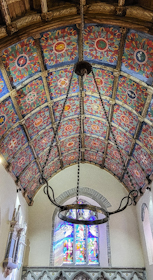
QUETHIOCK IS A tiny village in Cornwall. It has a church, St Hugh, that contains many interesting features.

One small thing that fascinated me was a small brass plate attached to a wooden table. It commemorates Dr Erich Schneider of Aussig (Usti na Labem) in Bohemia, who was born in 1889, and perished in the Auschwitz concentration camp in 1944. His wife, Marketa, was interned in the Terezin concentration camp, but survived. She moved to England after WW2. The Schneiders had a son, Johann, who was born in 1921. He was educated in England. At school or college, he became friendly with Reverend Lintell’s children, and spent holidays with them in Quethiock. Later, Johann became an economist at the Treasury, and between 1987 and 2005, he was an assistant pastor at St Anne’s Lutheran Church in London.

It was a great surprise finding this memorial to a victim of the Holocaust in sucharemotepart of Cornwall.