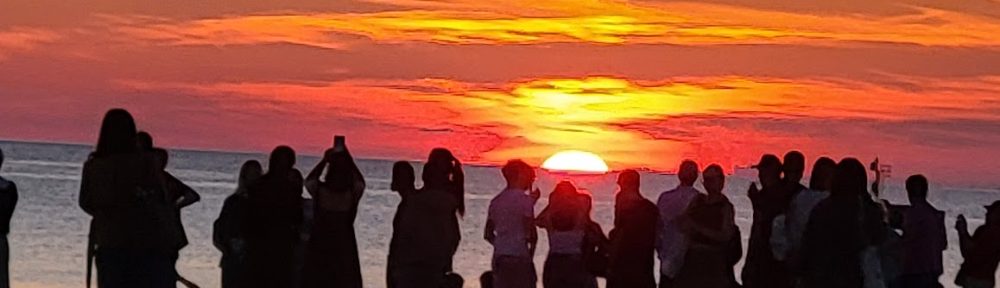
Matterhorn

It is hard to say which is my earliest memory. I believe it was going to St Albans church hall in Golders Green (in north-west London) to collect orange juice with my parents. I was born in 1952. In the early 1950s, the government supplied young children orange juice free of charge. The juice, which was free of the ‘bits’ that are found in many of today’s orange juices, was supplied in glass medicine bottles with cork stoppers.
 

MATTER 1

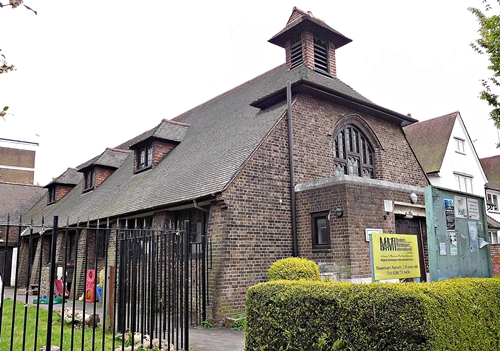
St Albans church hall in 2017

Another early memory dates back to 1955. We had just disembarked from an ocean liner in Cape Town. There were tram-like tracks embedded into the concrete of the quay. Adventurously, I put my foot into the groove of one of the rails, and then could not remove it. This caused quite a commotion as my mother carefully detached me from the rail along which large cranes travelled. This might be an actual memory, or someone may have told me about it later.

I do remember my first morning at primary school, which I entered aged 4 years. My parents took me to Golders Hill School on the first day along with my little friend Anthony. We stood next to each other in the front row of the assembled school. Suddenly, another boy, a complete stranger, pushed himself between Anthony and me. He said: “I want to be your friend.” He was Nick, and we remained friends for almost twenty years. I have only seen Anthony once since that day at school.

Every day at Golders Hill began with assembly. We were lined up in rows while our names were called out. We were required to answer in Latin: “Adsum”. As I did not start learning Latin until after I had left the school, I had no idea why we were required to say this peculiar word, which I later discovered means ‘I am present’.

Following the roll-call, we had to recite something, which to my young mind began with something that sounded like “Our father widgeartahev’n”. This recitation included many other words that were new to me. No one ever explained why we were saying this, or what it was. It was years later that I realised that we had been saying the Lords Prayer at high speed.


MAT 2

Golders Hill School in 2017

During the morning assembly, we stood facing the teachers and the then Head Mistress, Miss Davis. The latter used to cycle to school with her three corgi dogs stuffed into the basket at the front of her bicycle. The dogs spent the day resting in her office. On the wall behind the teachers and facing us pupils there was a black and photograph of a snow-topped mountain. Why it was there, I never found out, but unlike the other mysteries of roll-call, we learned that the mountain in the picture was the Matterhorn.
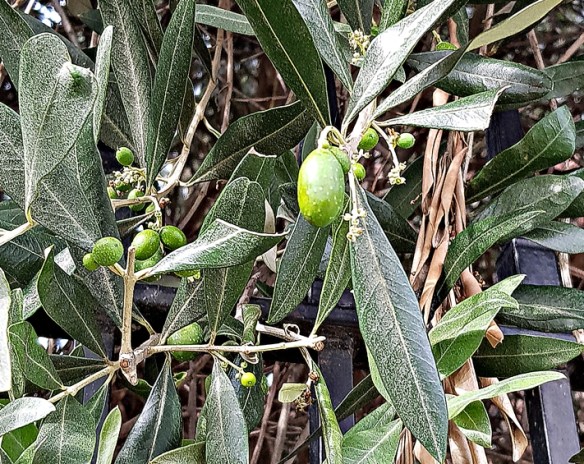
Olives growing near Portobello Road

Florence (Italy) 1960s and London 2018


In the 1960s, my parents, both art-lovers, used to take my sister and me on annual trips to Florence in Italy.

FLORENCE 1

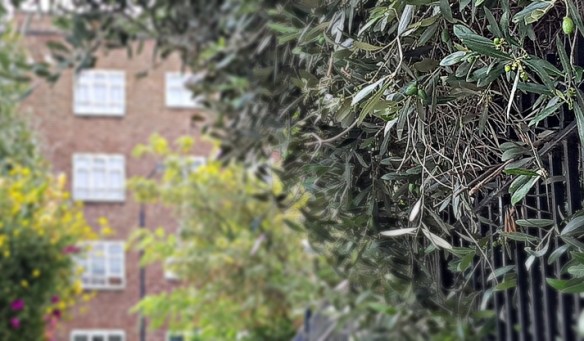
Olives growing near Portobello Rd, Sept 2018

Seeing some olives growing near Portobello Road in London reminded me of these trips. Here is what I wrote in my book, “Charlie Chaplin Waved to Me”, which is about travels I made during my childhood:

“The Oltrarno is the part of Florence on the left bank of the River Arno. It contains major sights such as the Pitti Palace, the Boboli Gardens, the Piazzale Michelangelo, the Belvedere Fortress, and the churches of S Spirito and S Maria degli Carmine. Almost every afternoon included a visit to the Oltrarno. This was made for sartorial rather than cultural reasons. My mother’s dress maker, whose name I can no longer recall, had a small shop near to S Spirito. Maybe, there is a Freudian reason for my amnesia; the visits to his shop filled me with dread. My mother had dresses made in Florence. As I have already hinted, she was a stickler for perfection. The long-suffering dress-maker in the Oltrarno must have valued her custom to have been able to put up with the unending visits we made in order to allow my mother to try the latest version of the garments that he was preparing for her. My father and us two children had to sit in the small narrow shop looking at tatty, well-thumbed magazines full of pictures of dresses whilst my mother and the tailor spent much of the afternoon dealing with the latest stage in the fabrication of her dresses. Our visits to this shop were often prefaced with my mother saying that of course we did need not wait for her there, but we knew better. Our absence would not have been well-regarded.

FLORENCE 60s ARY Sminiato

Adam Yamey at San Miniato, Florence, in the early 1960s

Florence was, and still is, famous for its leather work. My mother was particularly keen on one aspect of this craft: footwear. She liked good shoes, but many of them did not fit her wide feet. So, we tramped around Florence, entering many of its shoe shops and waiting patiently (or impatiently in my case) for her to try on numerous pairs of shoes. Almost all of them were unsuitable for her to wear. One shop whose name still fills me with some dread was that of Salvatore Ferragamo on the Via Tornabuoni. The fact that I remember this high-class shoe store is a testimony to the amount of time that we spent there. As was usual, if any of us showed any signs of impatience, she would tell us that we need not wait for her, but we knew that this was not what she really felt …

FLORENCE 4

San Miniato, Florence. Pic by Adam Yamey in early 1960s

… Florence was not, as you may be beginning to imagine, one long round of paintings, sculptures, shoes, dresses, and brassieres. Many afternoons ended with a trip up to the Piazzale Michelangelo. This panoramic platform or terrace, which is really more of a large open space with one side overlooking the hills sloping down to the River Arno, provides a magnificent view of the city. It is a readymade vantage point for postcard makers and other photographers. A little behind the Piazzale a series of staircases flanked by pine trees leads up to a church with a wonderful black and white marble façade. This is S Miniato al Monte and was our main destination when going up into the hills. This peaceful sanctuary high above the bustling city is undoubtedly a great example of unadulterated 13th century Romanesque architecture.

FLORENCE 3

Cemetery of San Miniato, Florence. Pic by Adam Yamey in early 1960s

After admiring this church, we did not return to the city centre by bus, which is how we arrived. Instead, we walked. We used to descend from the raised terrace in front of S Miniato al Monte and start walking away from the Arno along the level Viale Galileo, which follows a gently sinuous contour along the left side of the river valley. After almost a mile, we would then turn right onto the narrower Via S Leonardo. This road descends gradually, passing the walled gardens of well-separated villas. The branches of olive trees in these gardens overhung the road.

FLORENCE 2

Olives growing near Portobello Rd, Sept 2018

Every year, my mother used to break off a small twig bearing greyish green olive leaves and several, usually unripe, olives. She would take it back to London to remind herself of the great pleasure that she derived from being in Florence.”

I remember finding a sprig of desiccated young olives and dried leaves amongst her possessions long after her early death in 1980.


Adam Yamey’s book “CHARLIE CHAPLIN WAVES TO ME” is a collection of tales of journeys made during the author’s childhood.

In paperback, click: HERE, please

For Kindle version, click: HERE, please