
Faith healing in a well in Baroda

ACROSS THE MAIN ROAD from the 16th century Hazira Maqbara – a mausoleum – there is a small stepwell – the Hazira Vav. We have visited it before but never saw it in use.

A flight of tiled steps leads down to the water in the stepwell. To put it mildly, the water looks filthy and completely uninviting.

At the top of the stairs, there is a small Hindu shrine. The small courtyard surrounding the top of the staircase is decorated with coloured images depicting various Hindu deities. A few coconuts hang between them. These nuts are considered auspicious by Hindus. At our Hindu wedding in 1994, coconuts were included on the complex ceremony, which lasted several hours.
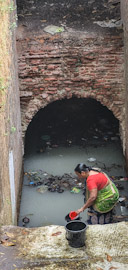
While we were looking at the well, a lady in a sari and her husband arrived. The woman descended the steps to the waters edge. Her husband explained to us that she was suffering from itchiness and that the curative waters of the well might help cure her condition.

The lady picked up one of the bucket on the step beside the water, and filled it from the well. Then, she began dowsing herself with the water. Fully dressed, she poured several buckets of the unwholesome looking water over her whole body.

Having watched this, we felt that it was unlikely that the water itself would heal her, but more likely, it was her faith in its curative properties that might have helped. Having seen the water, my thought was that if one bathed in the well, it is likely that you would end up less healthy than before you entered it.
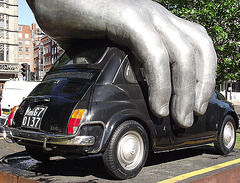
Healing hand

hand


In the UK, dentists cannot refuse to treat patients who admit to having serious illnesses such as AIDS (HIV). Dentists are supposed to have taken precautions to protect their patients, their nursing staff, and themselves against the risks of spreading disease by cross-infection. However, human nature being as it is, some dentists fear catching diseaes from their patients despite adhering to the appropriate requisites to prevent cross-infection. Irrationally, they try to ‘palm off ‘ patients whose medical conditions they fear by referring them to dental hospitals and specialist clinics. This is unfair to the patients who are forced to wait for long periods to be seen at these referral places for ‘specialist’ treatment that they do not actually need. I was not one of these over cautious fear-filled dentists. I treated everyone whatever their medical status.

I have treated many patients who have been infected with AIDS and other worrying illnesses such as Hepatitis B and C. I followed cross-infection guidelines and treated them no differently than I did for other patients. 

Many, but by no means all, of my patients were grateful for whatever I had done to deal with thier dental problems. Some of them, but not all of them, used to shake my hand and the end of an appointment or of a course of treatment. I appreciated that. What I noticed over the years was that the patients most likely to shake my hand were those who had been diagnosed with AIDS. I had the feeling that they were really grateful that I was prepared to touch their mouths without making a fuss about, or showing any fear of about their undoubtedly serious medical condition. The AIDS patients seemed to appreciate that I did not treat them as pariahs.