
WHEN WE WERE in Ahmedabad in November 2025, we saw a superb exhibition at the Kasturbhai Lalbhai Museum. It was housed in a separate, contemporarily designed annex of the museum, the Rahul Mehrotra gallery, within the grounds. This was built on the site of the Lalbhai family’s former tennis court.
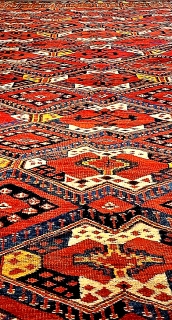
The show we had come to see was called “Bukhara”. It was an exhibition of 19th century traditional textiles from Central Asia, including decorative examples of suzani (needle-crafted hand embroidery using silk or cotton), ikats (weaving using complexly dyed threads), and rugs. The textiles and items (e.g., clothing) made by craftsmen living near to the Silk Routes in Central Asia were magnificently coloured, often with dramatically vivid patterns. On one piece of fabric, decorated with six identical circles, we noticed that one of the circles had a smaller one sewn within it. This, we were told by our guide, was a deliberate imperfection placed to show that only God can create something that is perfect. It might have been deliberately imperfect, but the exhibition was as near perfect as possible.
 yamey
yamey 