
A gripping novel written in the nineteenth century

HERE IS A book I have greatly enjoyed reading. It is “The Bertrams” by Anthony Trollope (1815-1882). First published in 1859, this is a story that highlights some weaknesses of human behaviour, the consequences of ill-conceived decision making, and the risks taken when marrying for the wrong reason. The novel is set mainly in England, but significant parts of it take place in the Middle East, notably in Egypt and the Holy Land.
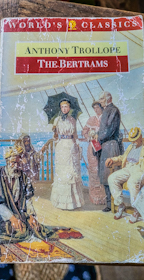
 

The main characters in the story are George Bertram, George’s miserly but extremely wealthy uncle, George’s cousin Arthur who attended Oxford with him, Henry Harcourt who is a little older than George, Caroline Waddington, and Adela Gauntlet. George falls in love with Caroline, and Arthur with Adela. Each man wins the heart of the lady with whom they have fallen in love. However, in both cases, there are impediments that prevent them from marrying. Eventually to George’s great dismay, Caroline marries his friend Harcourt, by now a successful lawyer and ambitious politician. But this is a marriage without love, for Harcourt has married Caroline in the hope that she will receive a huge inheritance from her grandfather, who is George Bertram’s uncle.


In addition to the principal characters, there are many minor characters, most of whom are important in the story. Trollope’s portrayal of these and the main protagonists is both perceptive and often rich in humour. Throughout the novel, he explores the strength and frailties of human behaviour. He also describes how nineteenth century English people behave while travelling abroad. Although my copy of the book has almost 580 pages, not including notes on the text and a long introductory essay by Geoffrey Harvey, the story never flagged. Even though I began to guess how the tale would end, it was fascinating to follow its often-surprising twists and turns on its way to the conclusion.


“The Bertrams” is not only a ‘page turner’, but an example of storytelling at its best.
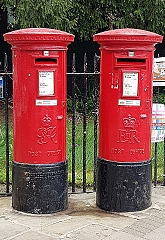
A pair of post boxes

WHILE WALKING IN CAMBRIDGE, I spotted a pair of pillar boxes. At first sight they looked identical but soon I realised that they were not. One had a wider orifice for inserting letters than the other. The wider one bears the ‘logo’ of Queen Elizabeth II and its neighbour with the narrower slit bears the logo of the Queen’s father, King George VI. Apart from these differences, there were much the same.

The two pillar boxes I saw in Cambridge are not particularly old. The first post box on the British mainland was placed in Carlisle in 1853. The idea of using such receptacles for collecting mail is connected with the author Anthony Trollope (1815-1882). An informative website (https://www.postalmuseum.org/collections/highlights/letter-boxes/#) related:

“Anthony Trollope, now more famed as a novelist, was, in the 1850s working as a Surveyor’s Clerk for the Post Office. Part of his duties involved him travelling to Europe where it is probable that he saw road-side letter boxes in use in France and Belgium.He proposed the introduction of such boxes to Britain and a trial on the Channel Islands was approved. Four cast-iron pillar boxes were installed on the island of Jersey and came into use on 23 November 1852. In 1853 the trial was extended to neighbouring Guernsey. None of the first boxes used on Jersey survive. It is possible that one still in use on Guernsey together with another in our collection, originally sited in Guernsey, date from the 1853 extension to the trial.”

Before the introduction of pillar boxes:

“… there was [sic] principally two ways of posting a letter. Senders would either have to take the letter in person to a Receiving House (effectively an early Post Office) or would have to await the Bellman. The Bellman wore a uniform and walked the streets collecting letters from the public, ringing a bell to attract attention.”

Well, all that history is news to me and I might not have bothered to find out about it had I not seen the father and daughter pillar boxes standing side=by-side in Cambridge’s Market Square.