The maharajah’s garage

Guide books and garages

yamey's avatarGUJARAT, DAMAN, and DIU

I am not sure that we would have discovered the collection of cars assembled by the maharajahs of Gondal had we not had a detailed guidebook to Gujarat. Maybe we might have learned about it by chance but being in possession of a guidebook made certain that we were aware of it.

book 3

Detailed guidebooks of Gujarat, written in English, are few and far between. During the planning and our actual trip, we made use of two books.

book 1

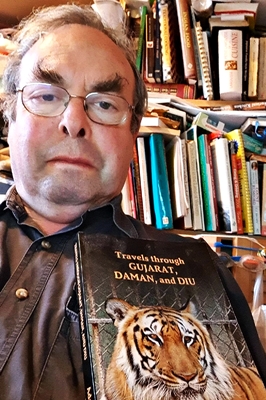
Philip Ward’s “Gujarat Daman Diu – A Travel Guide” was published in 1994. Like his excellent guidebook to Albania, Ward presents Gujarat and its associated former Portuguese colonies in the form of a detailed, informative travelogue. It is a book that is both designed to be read in an armchair and to be used ‘on the road’. However, it was written before the earthquake of 2001 and its practical information is out of…

View original post 568 more words

Wandering along Warren Street

W1

Warren Street is a station on the Northern and Victoria Lines of London’s Underground network. Situated at the intersection of Tottenham Court Road and Euston Road, both important arteries, Warren Street itself is comparatively small and of minor significance in the greater scheme of things. Be that as it may, this short street, which runs south of and parallel to Euston Road, has had some importance in my life.


When the Underground Station was opened in 1907, it was named ‘Euston Road’. In 1908, it acquired the present name.  By the time that I began using the station regularly (in 1970), the Victoria Line had been serving the station for two years. Warren Street itself was built in the late 18th century as part of the Fitzroy Estate. It was named after Anne Warren (1737–1807), who married Charles Fitzroy (1737-1797), First Baron Southampton.

W6

In the early 1970s, when I was studying at University College London (‘UCL’), one of my fellow students on my BSc course in physiology was a young Indian girl, Lopa, who is now my wife. She spent a couple of years living at the International Students House (‘ISH’) which faces Great Portland Street Underground Station. She and other Indian students introduced me to really good Indian food. This was served at the now no longer existent Diwan-i-am restaurant on Warren Street. It was here and at other nearby restaurants, such as Diwan-i-khas, Lal Qila, and Agra, that food was cooked by Indians and Pakistanis rather than by Bangladeshis, who operated the majority of so-called Indian restaurants in the UK. While Bangladeshi cuisine might be excellent, much of the ‘Indian’ food cooked by Bangladeshis is less satisfactory.

W3

When the Diwan-i-am was in business, so were many car dealers who had their premises on Warren Street. These have long since disappeared. One business that still exists and predates the Diwan-i-am is Tiranti, an important supplier of, to quote their website: “…materials, equipment and tools to sculptors, modelmakers, mouldmakers, designers, prototypers, woodcarvers, stonecarvers, specialist plasterers, building picture and furniture restorers, potters and ceramicists.” Giovanni Tiranti started this enterprise in High Holborn in 1895. The company first began using premises near Warren Street in 1945. I am not sure when the Warren Street shop opened, but it was about 20 years ago at least. I never purchased anything there but my late uncle S, an engineer by profession and a keen sculptor in his spare time, was a regular customer.


I studied at UCL for twelve years. During the last five of these, I was studying dental surgery at the now, sadly, no longer existing Dental Hospital. Warren Street Station was the most convenient place from which to reach the Dental School from my home in Golders Green. It was a few yards from the station to the passage that led from Tottenham Court Road into Mortimer Market, where one part of the Dental Hospital was housed. In those days, the passageway was flanked by an official Iraqi Tourist Office. I used to visit this occasionally to look at the fine exhibitions of photographs shown there. The staff, no doubt agents of the late Saddam Hussein, were friendly. Once, they gave me a gift of four LPs of Iraqi folk music. Many of the ancient sights in the photographs might well now have suffered damage during the troubles that afflicted Iraq long after I had become qualified as a dentist.

W2

There were several photography suppliers’ shops on the stretch of Tottenham Court Road near Warren Street. Their windows displayed a huge range of camera bodies and lenses. I bought my first SLR camera at one of these shops. They have mostly gone now. So also has Sterns. This electrical shop was well-known for its superb stock of African music LPs. Some years after I had left UCL finally (in 1982), Sterns, which opened in the early 1950s, moved from its somewhat aged premises on Tottenham Court Road to a newer shop around the corner on Euston Road. This has also disappeared, but Sterns still goes on in the form of an on-line firm.


One rainy early Monday morning, I emerged from Warren Street Station, and walked to the Dental School. The streets seemed emptier than usual. When I arrived at the school, the doors were locked closed. I was puzzled. Then, I bumped into another student, also soaking because of the weather. Shamefacedly, we realised that we had turned up on a bank holiday.

W4

Some time during the mid to late 1970s, a branch of McDonalds opened on the corner of Warren Street and Tottenham Court Road. Occasionally, I used to pop in there for a snack on my way home. Now, some decades later, Warren street is lined with ‘trendy’ eateries, one of which is housed in an old dairy on the corner of Conway Street. Much of the original tilework of the former dairy of J Evans has been preserved. Although there are many newer buildings on Warren Street, a few of the original late 18th century structures have survived.

W5

While Warren Street is not worthy of a long detour, it provides much more than a name for an Underground Station.


From Persia to India

Glimpses of Parsi presence in Gujarat and Diu

yamey's avatarGUJARAT, DAMAN, and DIU

A Parsi dharamshala (guest-house for pilgrims) near Udvada Station

The Parsis, followers of the ancient Zoroastrian religion, are few in number, making up a minute fraction of India’s population.

Fire Temple in Ahmedabad

In 2014, there were less than 70,000 Parsis in India, and this number is decreasing rapidly. Though insignificant in numerical strength, the Parsis have made a disproportionately enormous positive impact in many fields of activity in India and the rest of the world. To appreciate their achievements, one need only consider that the following well-known personalities are all of Parsi origin: the politicians Dadabhai Naoroji, Bhikaiji Cama, and Pherozeshah Mehta; the industrialist families Wadia, Petit, Tata, and Godrej; scientists Homi J Bhabha and Homi Sethna; musicians  Kaikhosru Shapurji Sorabji, Zubin Mehta, and Freddy Mercury; military men including Sam Manekshaw; authors  Rohinton Mistry, Firdaus Kanga, and Bapsi Sidhwa; actors John Farhan Abraham and Boman Irani; and a host…

View original post 737 more words

His spirit lives on…

A copper urn that contained the ashes of Mahatma Gandhi …

yamey's avatarGUJARAT, DAMAN, and DIU

A short excerpt from Adam Yamey’s new book about Gujarat

GUJ LULU PIC

In the Baroda Museum:

bar 2 Baroda Museum

There are two ‘memento mori’ on display. One is an Egyptian mummified corpse with exposed blackened feet, and the other is of more recent origin.

bar 1

Unlike the painted container containing the age-old ‘mummy’, the other item concerned with the end of life is empty. It is a copper urn used to carry the ashes of Mahatma Gandhi to the Morli sangam at Chandod. Other urns, which contained some of the great man’s ashes, exist elsewhere. An article in the Guardian’s on-line newspaper, dated 31st of January 2008, says of another urn containing Gandhi’s ashes:

‘The vessel was one of dozens containing Gandhi’s cremated remains that were distributed around India in 1948.’

bar 3

Close to the urn in Baroda, there is a letter of condolence written by Gandhi to a friend, who had just lost…

View original post 70 more words