
The Dohány Street Synagogue in central Budapest is now a major tourist attraction, visited by swarms of visitors. It is the largest surviving synagogue in Europe. Highly restored and well-maintained, it is a glorious site, but also a memorial to the awful fate of Hungarian Jewish people in the last year’s of WW2.
The first time I visited this place of worship was in the early 1980s, when Hungary was still part of the Soviet bloc, under control of the Russians. Unlike today, 2026, then there was no queue of tourists waiting to see the building.
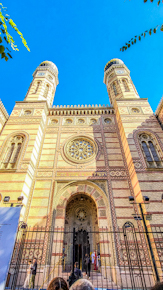
To enter it back on the early 1980s, one simply went to the watchman and asked permission see the interior.
On the afternoon when I went there, I was not the only person in the watchman’s small office. There was a German and an two Americans – a couple.
The watchman asked us where we were from. The German answered first, and the caretaker said:
“Come back this evening when the service is being held”.
The German left, and the man turned to us. When he heard that we were not German but British and American, he admitted us to the interior of the great synagogue.
The place was not in a good condition. It looked as if it was falling to pieces and needed a great deal if care and attention.
The three of us looked around the ill-lit synagogue without saying anything. Then, as we walked towards its exit, the American said in all seriousness:
“Back home, the Fire Department would not approve of this place. It contravenes all fire regulations.”
And that is all he could say about a building whose existence is a reminder of a community that was all but wiped out a few years before we visited the synagogue.
It always amazes me how differently people see the same thing. For me, the synagogue was a moving experience; for the American it was poor example of health and safety; and for todayourists, it is yet another ‘must see’ item to tick off one’s Budapest ‘bucket list’.

