
Sometime in the mid-1970s, I travelled from London to Platamon in northern Greece by road with my PhD supervisor, Robert, and his wife. We drove a Land Rover and towed a caravan. The trip took eight days, during which there was plenty of time to discuss a wide variety of topics.
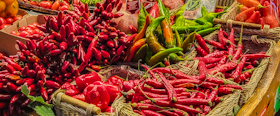
One of the subjects that Robert brought up was a series of imaginary boundaries that divide Europe in different ways. For example, there must be a watermelon line that separates parts of the continent where watermelons are grown from the parts of Europe where they are not. Similarly, there must be an olive line, north of which olives are not grown and harvested.
I read somewhere that a French author – I have never discovered which one – proposed that there must be a line south of which Brussel sprouts are not routinely consumed.
Another line proposed by Robert is one that separates the areas where church towers are topped with bulbous onion-shaped, as for example in southern Germany, from other place where church towers are not topped with these domes.
One could proposed many other examples, but you should now be seeing what I am getting at.
Another line that interested Robert a great deal was that which bounds the northern limit of an an commonly seen in hot desert conditions, Cataglyphis bicolor. Robert became an expert on this insect’s ecology and foraging behaviour. The place he studied it was on the sandy flats near the sea at Platamon.
Drawing these notional lines might be becoming more difficult because climate change is affecting the geography of crop growing significantly. With summer temperatures in southern Europe rivalling those in the Gulf States, I would not be surprised if Mediterranean crops such as olives will soon be grown in northern territories such as the south of England. Robert would have been surprised if he had lived to experience the changed climate we are now experiencing.

