
There is something fishy about Hastings

THE HASTINGS CONTEMPORARY art gallery is housed in an elegant modern structure. Some of its large windows and the terrace outside its café look out over the fishing vessels moored on the nearby shingle beach. Other windows give the visitor a view of tall wooden sheds covered with overlapping planks of timber painted black. And yet other windows look towards a couple of long-established purveyors of sea food. The timberwork on the outside of the Hastings Contemporary is  painted black to match its towering neighbours.

The tall wooden structures are ‘net shop’ sheds used for storing fishing nets and other gear when not in use. They are called ‘shops’ not because they sell something, but because ‘shop’ is an old-fashioned word for ‘workshop’. A newspaper article (www.hastingsindependentpress.co.uk/articles/culture/features/the-net-shops-part-one/ ) explained further:

“The Hastings net shops are unique: tall, thin wooden sheds, up to three stories high, painted black, standing side-by-side in clear-cut rows on a part of beach near the sea. Sheds of various shapes and sizes have been on this shingle in front of Hastings Old Town for many centuries, but it was a town planning decision in 1835 that created both the remarkable architectural design and the layout that together make this group of buildings unique. The shops are the traditional storage buildings of the Hastings fishing fleet. They were used in the past to stow gear made from natural materials – cotton nets, hemp ropes, canvas sails, etc – which would rot if left in the open, especially when wet. If possible, the items would be dried on the beach first, and then kept dry inside these weather-proof stores. “

The sheds, the fishing vessels, and the fish shops are all spread along Rock-a-Nore Road, which runs between the cliffs and the seashore, which in this part of Hastings is known as ‘The Stade’. The word ‘stade’ is derived from a Saxon word meaning ‘landing place’.

The two fish shops caught my attention. One of them is called The Net Shop – a jellied eel bar. It is appropriately named because it is right next to a net shop. Established in 1943, this place sells a variety of traditional English seaside seafood delicacies such as: jellied eels, cockles, mussels, oysters, whelks, winkles, dressed crab, prawns, baby octopus, shrimps, crayfish tails, lobster, ocean sticks, and so on. With the exception of the jellied eels, all of the seafood on display looked delicious to me.

The Net Shop jellied eel bar is separated from the Rock-a-Nore Fisheries by the already mentioned timber net shop. The Fisheries shop was started by a member of a family, who had been fishermen since the 19th century. Albert and Lilly set up the shop over 30 years ago. Today, the shop is run by their son Sonny and other members of his family. Sonny’s grandmother:

“… Polly Gannon, used to push a fish cart seven miles from Hastings to Bexhill and back again every day before his parents Albert & Lilly set up Rock-a-Nore Fisheries some 30 years ago.” (https://hastingsflyer.com/hastings-old-town-businesses/).

Sonny’s shop sells wide variety of fish and other seafood. In part of the shop there is an oak-chip fired smokery for smoking seafood. One of their products is smoked salmon. Albert, who worked as a chef in the renowned Brown’s Hotel in Mayfair, enjoyed experimenting with food. He invented a smoked salmon cure, which has been used in the shop for many years – its recipe is a well-guarded secret. Smoked sea salt is also on sale.

Had we been staying for a few days in Hastings in accommodation with cooking facilities, I am certain that we would have been regular customers at both the Net Shop and its near neighbour, Rock-a-Nore Fisheries. However, on our most recent visit, we were only in this charming fishing town for a few hours.
Night at the opera

OPERA IS FOR THE ELITE or, at least, for those who can afford the often-high seat prices. London’s Covent Garden used to offer some reasonably priced tickets, but these only gave access to seats or standing places far away from the stage, from which one could hear the performance, but one only saw what looked like ants moving around on the stage. Once I had one of these ‘budget’ seats at a performance given by the ballet dancer Rudolf Nureyev. I was so far from the stage that, even though my eyesight was excellent at the time, it could have been almost anyone or anything flitting about in time with the music so far away from me. The best I can say is that I have spent time under the same roof as the great dancer even though I could hardly see him.

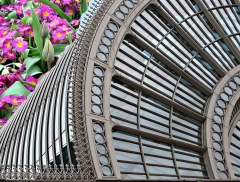
Floral Hall, Covent Garden, London

In early 1994, my wife, Lopa, became aware that a foundation was offering Covent Garden opera tickets at radically reduced prices to members of south Asian minority communities to introduce them to the joys of western European opera. Lopa decided to investigate this generous offer aimed at what the foundation assumed were ‘culturally deprived people’. She rang the organisation to ask how to become involved in the scheme. An ineffably patronising but kindly lady replied:

“Which community do you come from, by the way?”

“I am Gujarati.”

“All you need is a letter from the association that represents your community.”

“I don’t belong to such an organisation,” Lopa responded.

“Never mind, dear, why don’t you start one, and then contact us again?”

Not once did the lady ask Lopa if she had ever been to the opera. I suppose she assumed that south Asians never watched western European opera.

A short time later, Lopa sent a letter to the foundation on paper she had headed with the words: ‘Gujarati Worker’s Association of Kensington.’ Soon after this, she was accepted on to the scheme, which offered several tickets for each of a selection of top-class opera performances. These tickets were for the best seats and were priced at less than a fifth of their full price, which was still not an inconsiderable amount of money. We attended about six operas, sitting no more than three rows away from the stage. Sitting in these wonderful seats, which in 1994 cost well over £130 each, spoiled me forever. I do not think that I would be happy to attend another performance at Covent Garden unless I sat in seats with as good a view as those subsidised by the foundation.

On one occasion, we invited my father to join us. He was quite familiar the opera house at Covent Garden, having sat in the Royal Box several times with his colleague Lord Robbins, who was Chairman of the Royal Opera House. He accepted our invitation and we sat in wonderful seats watching an opera. I cannot remember which one we saw, but what happened in the interval, has remained in my memory. Dad said that he would treat us to champagne and smoked salmon sandwiches in the so-called ‘Crush Bar’, an exclusive refreshment area in the opera house.

We arrived at the Crush Bar, where a uniformed flunkey stopped all who wished to enter.

“We need a table for three,” my Dad explained.

“I am so very sorry, sir,” replied the flunkey, “all the tables are taken”.

My father reached into his pocket, and withdrew a £10 note before saying:

“Would this help you find a table?”

“Please follow me, sir,” replied the flunkey as he led us to an empty table.

Incidentally, the refreshments my father bought the three of us cost far more than we had spent on the subsidised tickets. 

At each of the subsidised performances we attended, we saw few if any other south Asian or any other people of non-European appearances in the audience. Sadly, the foundation abandoned their scheme about a year after we had joined it. There might have been other schemes that followed it, but we never found out about them.  

Oh, in case you are wondering about the Gujarati Workers Association of Kensington, whose creation was encouraged and suggested by the lady at the foundation, which shall remain unnamed, it still has only one member.