Do not expect to get your prescription honoured at this pharmacy

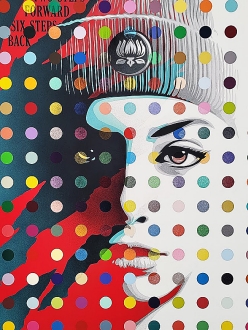
LOVE HIM OR HATE him, there is no denying that the artist Damien Hirst (born 1965) has plenty of imagination. Between 1997 and 2003, he created a restaurant in London’s Notting Hill Gate. It was called Pharmacy, but had to change its name after the Royal Pharmaceutical Society of Great Britain objected to it. Its new names were anagrams of the old: first Achy Ramp, and then Army Chap. Its decorative theme was pharmaceutical. For example, its walls were lined with cupboards containing (empty) drug and medicine packaging, as well as clinical equipment. It gave the visitor the impression of being in part of a busy hospital or clinic. From what I can remember of the place, its décor was vastly more exciting than the costly fare served to its customers. I was sad when it closed as it was a distinctive landmark in the area.

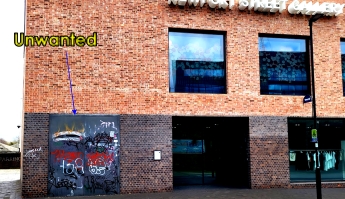
In 2016, Damien Hirst opened Pharmacy 2 on the first floor of his recently completed Newport Street Gallery (near Lambeth Palace). For a few years, this pharmacy themed restaurant offered a range of food and drinks, none of which were cheap. The interior of Pharmacy 2 follows on from the original art-installation-cum-restaurant design of the Notting Hill Gate version. An online article (www.dezeen.com/2016/02/18/damien-hirst-pharmacy-2-restaurant-mark-hix-newport-street-gallery-caruso-st-john-london/) describes the place well:

Similar to its predecessor, which was designed by Barber & Osgerby’s interiors company Universal Design Studio, the interior follows a clinical theme inspired by Hirst’s 1992 artwork Pharmacy. Images of tablets and brightly coloured pills have been embroidered onto leather banquettes and embedded into the marble floor. Bar stools are topped with pastel-coloured pill-shaped seats. Walls are covered with a silver-coloured wall chart of pills and pharmaceutical products first produced for the original Pharmacy restaurant … A neon prescriptions sign hangs above the bar, along with a series of sculptures based on molecular structures. Windows are covered with dark-coloured translucent vinyls. Stark lighting is used to reaffirm the restaurant’s pharmaceutical theme.”

These words give some idea about this fantastic place, but it must be seen to be believed. 

Pharmacy 2 has not been functioning as a restaurant for several years. When we visited Newport Street Gallery in May 2025, Pharmacy 2 was open to the public, and visitors can serve themselves with tea and coffee without charge. On each of the restaurant’s tables, there are art books for visitors to browse. The young man, an invigilator, who was keeping an eye on the place told us that occasionally the restaurant is revitalised for feeding visitors participating in special events. At these ‘pop-up’ events, meals are costly.

Pharmacy 2, like its predecessor in Notting Hill Gate, is an art installation. It is appropriate that the canteen of the Newport Street Gallery is not merely a restaurant but also an amazing work of art.

The Power and the Glory by Connor Hirst in south London

THE NEWPORT STREET Gallery, which is in a side street not far from Lambeth Palace and the Garden Museum, was opened in October 2015. Housed in a building originally built in 1913 as a theatre carpentry and scenery production workshop, these spacious premises are used to display selections from the huge number of works that have been collected over the years by the artist Damien Hirst. The current exhibition, which has been curated by Damien’s son Connor Hirst, is called “The Power and the Glory”, and is showing until 31 August 2025.

The walls of the rooms in the gallery are lined with photographs of atomic and hydrogen bomb test explosions (‘mushroom clouds’ etc.), as well as of the devastation that the former caused in Hiroshima and Nagasaki. Although many of the photographs are beautiful as works of art, they are grim reminders of the horrific destructive forces unleashed by detonating nuclear bombs. However, as the curator explained, many of the photographs have been composed in such a way that the viewer is unaware of the destruction going on beneath the picturesque clouds.

While the walls of the rooms are lined with photographs, the rooms contain many beautifully shaped (mostly shaped by nature) pieces of rock. They include a selection of so-called ‘scholar’s rocks’. These have been collected in China since the Song Dynasty (960-1279 AD), and appreciated for their inherent beauty. Most of them were found either in caves in Guandong province or at Lake Tai or in the Lingbi region. Amongst the collection of scholar rocks, there are some Japanese ‘water stones’, which are often shaped like mountains and waterfalls.

The stones are intrinsically beautiful and provide an interesting contrast to the photographs surrounding them. However, although the rocks and photographs served different functions, when displayed together as they are at the Newport Street Gallery, they cannot help becoming interlinked in the viewers’ minds. I could not help thinking that these rocks could easily have been similar to the fragments of buildings destroyed by the bombs at Hiroshima and Nagasaki.

An Australian artist in London

THE ARTIST DAMIEN Hirst has given London’s art lovers a great gift. In October 2015, he opened his Newport Street Gallery (near Lambeth Bridge) to the public. Housed in a former theatre scenery workshop, which has been beautifully modernised, the gallery puts on a series of exhibitions of artworks (mainly paintings) from Hirst’s enormous personal collection, which he has been creating since the late 1980s. The current exhibition, “Cloud of Witness”, which ends on the 10th of July 2022, is of works by an artist born in Australia, who created many of his paintings in London: Keith Cunningham (1929-2014). I had never heard of him before seeing the exhibition.

Cunningham arrived in London in 1949 and enrolled at the Central School of Art and Design, where he aimed to improve his skills as a graphic designer. In 1952, having developed an interest in painting, he joined the Royal College of Art (‘RCA’), where he worked alongside now famous artists including Leon Kossoff, Joe Tilson, and Frank Auerbach. He exhibited in the prestigious London Group in 1956 and the two years following. This group had been formed as an association of modernist artists, who wished to escape the restrictive criteria of the Royal Academy. In 1964, he was invited to become a full member of the Group, but for unknown reasons he declined. By 1967, he had ceased exhibiting his work and was making his living as a graphic designer and teaching at the London College of Printing. Despite this, he continued producing paintings until his death. He kept his paintings hidden from view in a spare room. So, it is fortunate for us that Damien Hirst acquired many of them and put them on public display this year.

The Newport Street Gallery website (www.newportstreetgallery.com) describes his work succinctly:

“Cunningham’s paintings were produced in London during the post-war period, an artistic environment dominated by the likes of Francis Bacon and Lucian Freud. A student at the Royal College of Art in the mid-1950s, Cunningham worked alongside major artists such as Frank Auerbach, Leon Kossoff and Jo Tilson.

Cunningham’s sombre paintings, coated in layers of dense, sculptural brushstrokes, are populated by skulls, fighting dogs and darkly altered human figures. Like his schoolmates and teachers at the Royal College, Cunningham was interested in figurative painting, transforming the reality of everyday life into loose, slowly disintegrating forms.

His canvases, like those of Bacon, Kossoff and Auerbach, are covered in powerful strokes of dark pigments conveying strikingly expressive forms. The Cloud of Witness seeks to redefine Cunningham’s role in the London art scene of the 1950s, highlighting not only his ability but also the variety of his inspirations. To this effect, it coincides with the major show at the Royal Academy of Arts, Francis Bacon: Man and Beast, encouraging visitors to compare and contrast the works of these two artists.” Having already seen the Bacon exhibition at the Royal Academy and works by other artists mentioned in the quote, I feel that it is a good summary of what we saw at Newport Street. My favourite works in the exhibition were some of the portraits and some of the more abstract works. Undoubtedly, Cunningham was a competent artist, but having seen the exhibition, I can understand why he is not amongst the better-known artists of his generation