
Becoming more aware during the covid pandemic

THERE MUST HAVE been some mistake. The organisers of the 2022 Bangalore Literary Festival omitted to invite me to speak about my writing at the festival, which is held in early December.
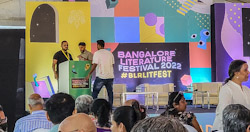
However, one of the invited speakers was the renowned travel writer Pico Iyer. He said many things that chimed with my way(s) of thinking. One of these was how little we know about our immediate surroundings. During the pandemic lockdown, his movements were restricted to the places in his near neighbourhood (in California). Everyday, he used to walk to the end of his street and gradually realised that until the lockdown commenced he had been unaware if the great beauty of his immediate surroundings, which he had never noticed before.

Likewise, for a few months during the first London lockdown, we did not stray more than about 1 ½ miles from our home. Every day, we took a stroll along streets, which we thought we knew well, and also along nearby streets we had never entered or even knew existed. Everyday, we spotted things we had never noticed before, despite having passed them often over a period of several decades. It seemed that when our horizons became closer and our world contracted, the acuities of our vision and perception expanded. We discovered that our temporarily contracted world revealed details and facets that were hidden from us, or went unnoticed, when our movement was unrestricted. It was these details that inspired me to investigate them and then write about them in what has become my book about West London.

As I listened to Pico Iyer’s excellent lecture, I realised that what we had noticed during the lockdown in relation to heightened awareness of our immediate surroundings in London was what he had experienced several thousand miles away in California.

Modern transport and communication technology has in many ways caused the world to seem as if it has shrunk. Pico Iyer mentioned this, but said that despite this we appear to know less about the world than we think. The enforced confinement to what we believed to be a familiar environment has demonstrated that we really know far less about it than we had hitherto always assumed.

Just around the corner … in South Kensington

PEOPLE USUALLY ASSOCIATE South Kensington with its magnificent set of museums. However, there is far more than that in the district, and within a few yards of the museums. Here are a few places of interest near to the Victoria and Albert Museum (the ‘V&A’).

The V&A stands on the northeast corner of Exhibition Road and Cromwell Gardens (a short stretch of the A4) and faces the Ismaili Centre on the southeast corner. This attractive building built for the religious community that is led by the Aga Khan was designed by the Casson Conder Partnership and completed in 1985. According to the website of the Ismailis, https://the.ismaili, the building’s pleasing exterior:

“… has used materials and colours which are compatible with those of the surrounding buildings while at the same time in keeping with the traditional Islamic idiom and its colours of whites, light greys and blues.”

Monument in he Yalta Memorial Garden

An open space, The Yalta Memorial Garden, on the east side of the centre contains a monument to remember “… the countless men, women, and children, from the Soviet Union and other East European states, who were imprisoned and died at the hands of Communist governments after being repatriated at the conclusion of the Second World War…” The memorial consists of a column on the top of which there is a sculpture by Angela Conner (born 1935) depicting 12 faces of men, women, and children. Nearby, a house on the northeast corner of Thurloe Square and facing the V&A, bears a plaque informing that the museum’s first Director Henry Cole (1808-1882) lived there.

The Brompton Oratory, or to give its full name, the Church of the Immaculate Heart of Mary, is a huge Roman Catholic church with a neoclassical façade and a dome. It stands east of the V&A. It was designed by the architect Herbert Gribble (1846-1894), a convert to Roman Catholicism, and constructed between 1880 and 1884. The architectural style is mainly Roman Baroque. This enormous edifice was the largest Roman Catholic church in London until Westminster Cathedral was constructed in the first decade of the 20th century.

Cottage Place runs along the east side of the Oratory towards the Holy Trinity Brompton church north of it. A building that looks like many of the older Underground station entrances on the Place has a façade decorated with blood-red glazed terracotta tiles. Between 1906 and 1934, when it was closed, it was the entrance to Brompton Road station on the Piccadilly Line. It was a stop between the still functioning Knightsbridge and South Kensington stations. It was closed because it was hardly ever used by passengers.  An article in the Guardian newspaper, published in February 2014, related that during WW2, the disused station was used as a command centre for anti-aircraft batteries. It also suggested that the Nazi Rudolf Hess (1894-1987) was interrogated here. Between the station’s closure and about 2014, the building was owned and used by the Ministry of Defence.

The Holy Trinity Brompton Church, a gothic revival structure, was designed by Thomas Leverton Donaldson (1795-1885), and completed in 1829. It was established to accommodate the growing population of this part of Kensington, which until then had to worship in the church of St Mary Abbots in Kensington, almost one mile away. In 1852, a part of the church’s land was sold for building the Oratory upon it. The large grassy space north of Holy Trinity, now a park, was formerly the church’s graveyard.

Although none of the places I have described rival the splendour of the V&A and especially its fantastic collection of artefacts, they are worth exploring if you happen to be in the neighbourhood. A problem in London is that there are so many places of the greatest interests to visitors, which often means they have so little time to explore the lesser-known curiosities that form part of the rich tapestry of London’s past and present.