
WHEN ARCHAEOLOGISTS DISCOVER and then remove historical artefacts from the ground, the terrain in which they have lain for centuries or maybe millennia is changed forever, and irreversibly. For once an artefact is removed and/or the site is excavated to reveal its original features, no amount of effort can restore the site to what it was before it was investigated by archaeologists.
Given the permanent changes resulting from the activities of archaeologists, it is important that the appearance of the site is recorded before, during, and after the archaeological dig. To do this, photography is very useful.
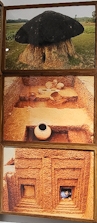
Yesterday, 7 January 2025, we viewed an exhibition, “Archeo Logical Camera”. It is being held in a gallery at the Kara Hotel, a luxurious and beautifully designed establishment located on the Maidan (Parade Ground) at Fort Kochi. The exhibits consists of several artefacts dug up by archaeologists as well as photographs taken by Mohamed A, who graduated in Fine Arts at Trivandrum, Kerala.
The photographs, each of which is a work of art, are those he took while documenting archaeological digs in various parts of India. The pictures show, archaeologists at work, the sites where they worked before and during the digs, and artefacts both in their original locations and after excavation.
Not only were the photographs beautifully executed and interesting, but also the exhibition was superbly displayed. The show is a project by Aazhi Archives, and the artistic director is Riyas Komu.
This wonderful exhibition is NOT part of the 2025/26 Kochi Muziris art biennale. However, after having now seen many of the festival’s artistic offerings, I think that the quality and originality of “Archeo Logical Camera”, exceeds most of what is to be seen at the Kochi Muziris Biennale.
 yamey
yamey 