
Caring for pigeons in India

This tall structure with numerous openings is a chabutra (Hindi), a chabutro (Gujarati). It is build to provide nesting places for pigeons. In Gujarat, one can see many of these. Their shapes differ but they all serve the same purpose.

You might wonder why pigeons, which are regarded as pests in the UK, should be provided with these wonderful living spaces in India, especially in Gujarat. Well, you can find out about pigeons in India in my book “88 DAYS IN INDIA: A JOURNEY OF MEMORY AND DISCOVERY”, which can be obtained from Amazon ( https://www.amazon.co.uk/88-DAYS-INDIA-JOURNEY-DISCOVERY/dp/B0FKTFBFM2/ )
Pigeon feed at a garden in Norfolk

PIGEON FEED IN A GARDEN IN NORFOLK


ALL OVER GUJARAT in western India, where many people are vegetarian,  there are dovecotes in a wide range of designs and sizes. These shelters for the birds are to ensure their wellbeing.


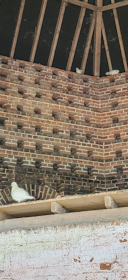
In the walled garden at Felbrigg Hall in Norfolk, there is a dovecote,  which was constructed in about 1745. Within it there are 968 recessed compartments, each of which is large enough for two dove’s nests.  Cosy as this might sound, the dovecote was built for a reason that would upset vegetarians.


In the eighteenth century,  fresh meat was in very short supply during the winter months.  The doves, who nested in the dovecote in large numbers provided an endless source of fresh meat for the residents and their guests at Felbrigg Hall. And the birds’ droppings provided a source of nitrogen rich manure.


The dovecote at Felbrigg Hall was beautifully restored in 1923, and is well-maintained by the National Trust,  which owns the property. White doves still make use of the dovecote,  but, as far as I  know, do not end up on people’s dinner plates.