
Lost and found at the Founders near Barbican

THE LIVERY COMPANIES were founded long ago by members of the same craft or trade. They were established originally to protect their businesses from rogue traders and to ensure that anyone practising a trade worked to satisfactory standards and good quality. Today, the livery companies still exist although now they are mostly involved in the life of the City of London and philanthropic activities.

The Founders Company, which was established in 1365, was made up of members who cast metal as their trade. They worked with castable metals such as brass and latten (a combination of copper and zinc). Their current headquarters are housed in a modern building just east of the east end of the church of St Bartholomew the Great (near the Barbican). One side of the building runs along the narrow St Bartholomews Passage. It was there that, at ground level, I spotted a bas-relief portrayal of a coat of arms made in white material.

A small information panel next to the crest related that this white material is Coade stone. This material, which was invented in the late 18th century, was an artificial material containing various ingredients. It solidified by firing in a furnace. This durable, weather-resistant material is easy to mould before firing, and was therefore favoured by sculptors and building designers. It went out of fashion by the 1840s.

The Coade stone crest outside Founders Hall was made in 1800, and then it got lost during the 19th century. Many years later, in the early 21st century, it was found and presented as a gift to its original owners, the Founders.  It commemorates the Company’s three Masters, who served in 2013, 2014. And 2015.

Although I have visited St Bartholomew the Great many times, it was only yesterday, the 31st of July 2024, that I first walked along Bartholomew Passage – just to see where it led. Luckily, on the way I found the well-preserved Founders’ Coade stone crest.

Guardian dragons

CAST-IRON STATUES of dragons mark the City of London’s boundaries on main roads leading into it., The City includes the oldest part of the metropolis.

Standing on their hind legs, the dragons stick out their red-painted tongues and rest their left forepaws on a shield with the coat-of-arms of the City of London. The creatures were designed by James Bunstone Bunning (1802-1863), who was architect to the City of London from 1843 until his death.

Thirteen of these dragons can be found in London. Some of them were placed at entrances to the City as late as the 1960s. The dragons are part of the City’s coat-of-arms, which was in use by 1381. In this emblem, a pair of them supports a crest.

I consider that these creatures look far from welcoming.

Two heads on the football field

WIMB


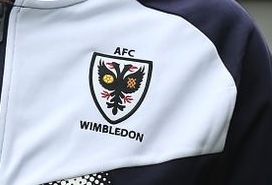
Back in March 2017, I was flicking idly through the London Evening Standard. So idly was I flicking that I looked at the sports pages, which I usually ignore. There was a large photograph of football players in orange shirts. Absent-mindedly, I stared at them, and then suddenly I noticed that their shirts had black double-headed birds printed on them. Knowing that the national symbol of Albania is a double-headed eagle, I wondered whether this was an Albanian team.  It was not. It was AFC Wimbledon, a team based in the southwest suburb of London, Wimbledon.

Soon, I discovered that Wimbledon’s municipal coat of arms bears a double-headed eagle. A trip to Wimbledon Library did not prove useful in my quest to discover why this two-headed bird should appear on the Borough’s crest. Various Internet websites suggested that it was there as a reminder that Julius Caesar had camped somewhere in what is now Wimbledon.

It is believed that the Ancient Romans used the eagle as a heraldic symbol, but it was usually the single-headed variety. It is unlikely that they used the double-headed variety, which dates back to Ancient Babylon and maybe before. It is likely that it was first used in a ‘Roman’ empire context after the fall of the Ancient Roman Empire, by the Byzantine Empire, a successor to that earlier Roman Empire, in the 12th century AD when it was adopted by Isaac I Komnenos (c. 1007 – c. 1060). His family originated in Paphlagonia (now ‘Paflagonya’ in Turkey) in Anatolia. Double-headed eagles were associated with the Hittites, who had lived in the area, notably in the city of Gangra (now ‘Çankırı’ in Turkey). A plausible theory, but probably unprovable, is that the double-headed bird migrated from the Hittites into Byzantine usage.

This brings us back to Wimbledon. From the little evidence that I have presented, the connection with Julius Caesar and the London borough’s crest seems weak. Whatever the real story, the crest is not an ancient one. It was designed and granted as late as 1906.


Part of  an image from http://www.sportinglife.com