
HERE IS A book I have greatly enjoyed reading. It is “The Bertrams” by Anthony Trollope (1815-1882). First published in 1859, this is a story that highlights some weaknesses of human behaviour, the consequences of ill-conceived decision making, and the risks taken when marrying for the wrong reason. The novel is set mainly in England, but significant parts of it take place in the Middle East, notably in Egypt and the Holy Land.
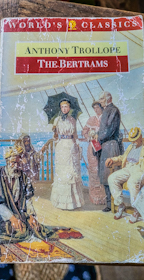
The main characters in the story are George Bertram, George’s miserly but extremely wealthy uncle, George’s cousin Arthur who attended Oxford with him, Henry Harcourt who is a little older than George, Caroline Waddington, and Adela Gauntlet. George falls in love with Caroline, and Arthur with Adela. Each man wins the heart of the lady with whom they have fallen in love. However, in both cases, there are impediments that prevent them from marrying. Eventually to George’s great dismay, Caroline marries his friend Harcourt, by now a successful lawyer and ambitious politician. But this is a marriage without love, for Harcourt has married Caroline in the hope that she will receive a huge inheritance from her grandfather, who is George Bertram’s uncle.
In addition to the principal characters, there are many minor characters, most of whom are important in the story. Trollope’s portrayal of these and the main protagonists is both perceptive and often rich in humour. Throughout the novel, he explores the strength and frailties of human behaviour. He also describes how nineteenth century English people behave while travelling abroad. Although my copy of the book has almost 580 pages, not including notes on the text and a long introductory essay by Geoffrey Harvey, the story never flagged. Even though I began to guess how the tale would end, it was fascinating to follow its often-surprising twists and turns on its way to the conclusion.
“The Bertrams” is not only a ‘page turner’, but an example of storytelling at its best.


 yamey
yamey 