
WHEN WE WERE in Bombay in November 2025, we saw exhibition related to the Bharat Tile Company. Founded in 1922, this company produces cement floor tiles. It pioneered this manufacturing process in India as part of the Swadeshi Movement, which encouraged self-sufficiency as opposed to a dependence on goods manufactured abroad, notably in Britain. It was part of the road to Indian Nationalism and independence from British rule. Bharat’s aim was to produce high quality tiles that reduce or replace imports and meet the highest international standards. In this it was successful. The company captured the Indian market, and as its website noted:
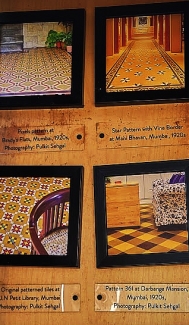
“Our craftsmanship graces the palaces of Maharajas, Raj Bhavans, distinguished residences, prestigious hotels, vital hospitals, vibrant clubs, bustling offices, bustling factories, cooperative housing societies, esteemed educational and religious institutions, as well as busy airports and railway stations.”
The exhibition displayed the types of tiles, how they are made, their designs, examples of their usage, and how they have been exported to destinations all over the world. The patterned floors that can be created with these tiles, and there are many of them to be seen in buildings all over India, are described in the exhibition as “tapestry in cement”.
 yamey
yamey 