
HUMANS HAVE BEEN weaving textiles for many centuries, for at least 12000 years, if not longer.
Today, while walking in the extensive grounds of a country house in Kachchh (Kutch) in Gujarat, we noticed something interesting about the decaying fronds that had fallen from palm trees. The fronds have long tapering stems that support the photosynthesising leaves of the tree. The stems are widest where they attach to the tree and taper as the distance from the trunk increases. The tree discards mature fronds to make way for new ones.
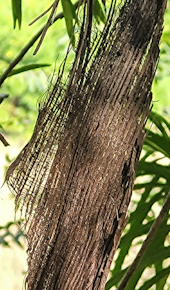
What interested us was that the drying fronds that have fallen from the trees shed or lose part of their external cuticle to reveal lattices of fibres that resemble woven textile. These lattices of drying palm fibres look just like sheets of sacking cloth. Nature achieves this natural weaving without requiring looms.
Palm trees have been around since long before Homo sapiens. Therefore, this natural form of weaving antedates human weaving activities. I wonder whether when our ancestors saw what we noticed today that they conceived the idea of weaving.
 yamey
yamey 