
THE BHARATIYA SANSKRUTI DARSHAN Museum in Bhuj houses a fascinating collection of artefacts which were collected from all over Kutch by Ramsinhji Kanji Rathod (1907-1997). Amongst these is an amazing collection of various kinds of textiles collected from all over the former Kingdom of Kutch (now part of Gujarat). Rathod also collected clay articles from the Harrapan site of Dholavira long before archaeologists began to take an interest in the area. I could continue by listing many other fascinating exhibits in the museum, but I will concentrate on three of them.
The three exhibits are all paintings by two Kutchi artists from Bhuj: Vadha and Lalmahad Juma. They were painted by 1884 at the latest. One of their creations hangs in Kedlestone Hall in Derbyshire, home of the Curzon family.
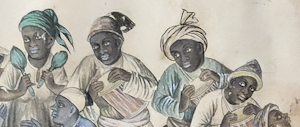
One of these three paintings in the museum depicts a folk dance being performed by Kutchi Sidis (people of Black African heritage living in India). The other two paintings depict Kutchi weddings.
What fascinated me was that these three paintings were exhibited outside Kutch: in Pune in 1888, and in London’s Wembley in 1925. They travelled over 5000 miles to Wembley to be exhibited in the British Empire Exhibition, which was held in the Empire Stadium between 9 May and 31 October 1925. The stadium later became England’s national football stadium. It was demolished by 2003, and replaced by a new one.
Interesting as this is, there are plenty of other exhibits to stimulate the admiration visitors to this wonderful museum ably curated by our friend Neeta Joshi. Undeservedly, this museum, which rivals many others I have seen in India, is not as well-known as other sights in Bhuj.
 yamey
yamey 